In the interview with Manfred Hoffbauer, Managing Director of trinidat Software-Entwicklung GmbH
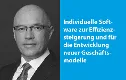
The trinidat Software-Entwicklung GmbH based in Düsseldorf develops custom software solutions as contract work for companies. The programming is carried out in meticulous detail according to the customer's specifications. The software serves both to digitalize business processes and thus increase the efficiency of the contracting company, but often created software components also become part of new products and business models. This enables medium-sized companies to manage digitalization and achieve rapid progress with their own products and services. In an interview with Manfred Hoffbauer, we discuss resource scarcity, technical know-how, licensing fees for software use, and the eternal desire to make everything just a little better.
DIGITAL FUTUREmag: Mr. Hoffbauer, custom software programming has been a component of digital development within our society and also within companies for many years. What is new about your approach? Why should companies definitely deal with the topic of custom software programming?
Manfred Hoffbauer: Standard software addresses topics that are interchangeable between different and particularly competing companies. It therefore offers no real competitive advantage. In contrast, custom software drives digitalization forward. We develop software for new processes and thus either optimize our customers' business processes or create digital products that our customers in turn pass on to their customers.
Custom software is typically used when there is no standard software available or when individually adapting the standard software through customizing would be too complex—which, incidentally, is almost always the case.
We combine custom programming with standardized processes and thus achieve the best possible result. The software is developed precisely according to our customers' specifications. Our project management, optimized over many years, ensures compliance with agreed schedules and budget frameworks. The proven quality assurance processes guarantee high customer satisfaction. We achieve the best of two worlds: the advantages of custom software combined with the benefits of standard software. The costly and time-consuming customizing is eliminated with custom software.
DIGITAL FUTUREmag: Let's then talk about efficiency enhancement. Why, in your view, is it usually better to use custom software rather than resorting to standard software?
Manfred Hoffbauer: A custom-programmed software optimally fits the client’s processes. Our software adapts to the processes of the contracting company, not the other way around. This means the implementation and employee training are correspondingly quick. After a short adjustment period, employees work more efficiently and are happier than ever.
The software we develop is often used by our customers to support their own clients. This applies to technically oriented design processes as well as networking field service employees or external sales partners. We love diving into our customers’ technically demanding processes and creating new digital products with them.
DIGITAL FUTUREmag: What about the costs? The development of software in the standard area is spread across many users, while individual software must be paid for by a single company. Isn’t that a significant disadvantage?
Manfred Hoffbauer: You’re absolutely right: The costs for developing standard software are spread across many users. But you shouldn’t forget that those many users also pay for many features they don’t need. And that’s not all. Since standard software rarely fits perfectly, it often requires customization. In this so-called customizing process, the customer frequently has to invest several times the license costs. This erodes both the supposed cost advantages and the shorter implementation times of standard software. And after just a few years, the provider releases a new version of the standard software, and the costly process starts all over again.
With custom software developed by us, the customer automatically becomes the owner. They receive an unlimited number of licenses, unlimited usage duration, and the software’s source code. This puts our customers in the enviable position of complete independence. They decide for themselves whether and when any extensions are integrated into the software. And if, in the unlikely event, a customer no longer wishes to work with us, they can find another software provider and have the program further developed there.
DIGITAL FUTUREmag: You mention smart products. What exactly does that mean?
Manfred Hoffbauer: A smart product is created by combining a traditional product with software. The best way to explain this is with an example. Cars have functioned more or less the same way for over 100 years. It’s only through the addition of intelligent software that a traditional car becomes a self-driving one. The knowledge and behavioral rules that drivers previously had to master are transferred into software in the form of algorithms. This creates a new smart product that the automotive industry can sell at a significant markup.
DIGITAL FUTUREmag: Can you give us a practical example of creating a smart product?
Manfred Hoffbauer: With software for parameterizing digital valves, the need for complex programming by an engineer is eliminated. The software for commissioning linear units enables our customer’s customers to carry out commissioning independently. By simplifying the sequence programming of a PLC control system via touchscreen and visual representation, the quantities at which retrofitting becomes economically viable are reduced. Our customers can achieve higher profits with small batches.
DIGITAL FUTUREmag: We talk a lot with mid-sized decision-makers. Managing directors and board members are well aware that there is no way around digital transformation. The question is: Where to start? How can you specifically support mid-sized companies in refreshing their product portfolio with smart products? How can we imagine the integration of software into existing or new products?
Manfred Hoffbauer: Be creative, start earning money with digital products and increase your revenue! Observe your competitors and think one step ahead! Create added value through the use of software and market it. In the simplest case, you can create a way to transmit data from your products to the cloud. Then give your customers the ability to query this data in a visually prepared form. For example, you can visualize the power generation of photovoltaic systems or predict maintenance cycles and other recurring events for your products.
Network your products with software and with each other, and promote data exchange. For almost all topics, you can set up forums and wikis to encourage communication among your customers. Imagine a digital thermometer. If all digital thermometers worldwide were networked via your app and continuously reported the current temperature, you could create a real-time heatmap of the entire planet. And suddenly you are on your way to becoming a global market leader!
Digital products can channel tips, tricks and instructions. They maximize customer loyalty and relieve your support department. Advanced applications and apps contain real expertise, whether in configuration during the selection process, during commissioning, or during optimization and expansion. The investment costs for digital products are often only in the lower five-figure range, and the market opportunities are practically unlimited!
DIGITAL FUTUREmag: At the DIGITAL FUTUREcongress on 05.11.19 at Messe Essen, you will be there with a large exhibition stand and present your products and services. What can visitors look forward to in particular?
Manfred Hoffbauer: The two managing directors of trinidat Software-Entwicklung GmbH are available as contact persons for all customers and interested parties throughout the day. We would be happy to show you our reference projects or discuss the requirements for new software projects. To sweeten your entry into digitalization, we are raffling off three digitalization starter packages. Each winner will receive a free initial consultation from us and a first layout for custom software to be created, designed by a professional graphic designer. We will cover the costs for the first three hours of the graphic designer.
DIGITAL FUTUREmag: Great. Then we look forward to the event at Messe Essen with you and wish you every success and good contacts. I am sure that many medium-sized companies will take away an appropriate impetus from a conversation with you. Thank you very much.
The interview was conducted by Michael Mattis, publisher of Entscheider kompakt and organizer of the DIGITAL FUTUREcongress.