In the interview with Marco Weigel, Managing Director of Objektkultur Software GmbH
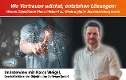
Digitalization is a technology project for many. For Marco Weigel, Managing Director of Objektkultur Software GmbH, however, it begins with people. We open this unique behind-the-scenes perspective in our upcoming interview with Silicon Valley Europe.
For years, Objektkultur has stood for the digitalization and optimization of customer operations processes in the Microsoft environment – from CRM strategies to modernizing complex application landscapes. What truly sets the company apart, however, is its culture: trust, courage, and a genuine “hands-on mentality.” The team thrives on challenges.
Marco Weigel’s own journey as a software engineer, software architect, project manager, later business unit manager, and eventually transitioning into sales and sales management, continues to shape his approach today. For him, leadership means supporting people in their development. Responsibility isn’t imposed from above but actively entrusted. Mistakes aren’t seen as weaknesses but as drivers of growth.
This mindset directly impacts the company’s external interactions. Customers experience teams that listen, think critically, and ask uncomfortable questions. Instead of standard solutions, individual, practical concepts emerge – driven by open communication, personal responsibility, and genuine team spirit. Agility isn’t just a method here; it’s an attitude: try, improve, and grow together.
Strategically, Objektkultur is also evolving rapidly, for example through its new merger with Inway Systems GmbH, which is currently forming a new group. This creates seamless process coverage – from customer-centric processes (Customer Operations) to value-adding processes (manufacturing, procurement, resource planning – ERP + financial accounting), known as value-centric Operations.
In the interview, we discuss why trust creates speed, why culture is a real competitive advantage, and why companies entrust their most complex challenges to Objektkultur.
Silicon Valley Europe:
What role does the corporate culture of Objektkultur Software GmbH play for you as a strategic success factor – and why does digitalization begin with people for you?
Marco Weigel:
For me, culture is the starting point of any transformation. Digitalization begins with people because behavior, trust, and collaboration determine whether a good idea can even take effect. When teams work on an equal footing, feel safe to ask questions, and dare to try things out, speed is created – entirely without pressure. This is exactly what shapes our everyday work: mistakes as a source of learning, clear responsibility instead of micromanagement, and genuine mentoring from trainee to senior. For our customers, this means: we listen first, understand the real pain point in customer operations, and then design solutions that work in day-to-day practice – not just in theory. This is how changes are accepted, quickly usable, and measurably effective.
Silicon Valley Europe: You have gone from software developer to managing director. Which experiences most strongly shape your leadership style today?
Marco Weigel:
I have learned that technology, business (expertise), and people belong together. From development, I bring a passion for technology and a clear understanding of problems; from business development and management, the ability to create context and set priorities. My leadership approach is: those who confidently believe in themselves quickly gain responsibility and can try things out and learn. This only works in combination with a culture of error and direct feedback.. At the same time, I expect everyone to take personal responsibility and think proactively. What’s important to me is that people don’t just describe problems but come with suggestions on how we can solve them. This creates clarity, speed, and strengthens the team. I challenge my team to stay curious, think independently, and provide critical feedback on my plans. This mindset ensures that we don’t deliver standard responses to customers but instead provide viable, honest solutions that work in day-to-day processes.
Silicon Valley Europe: They often speak of trust, courage, and a culture of failure. How do you create a work environment in which employees dare to try out new ideas?
Marco Weigel:
At Objektkultur, safety isn’t just a nice word or a value on a slide—it’s something we consciously live every day. We work with small, risk-limited experiments (timeboxing, feature toggles), blameless retros, and show-and-tell formats where unfinished work also has a place. Everyone receives mentoring and real responsibility—even interns and trainees get to shape things. Mistakes are made visible early, documented, and translated into improved standards. The result is tangible: more initiative, more speed, and higher quality. For the customer, this means shorter feedback loops, faster decisions, and solution-oriented collaboration instead of rounds of justification. Not every company has the same internal prerequisites for this. Many want exactly this way of working—and we help them get there.
Silicon Valley Europe:
Customer operations digitalization is a complex field. From your perspective, what sets Objektkultur apart from classic technology or implementation partners?
Marco Weigel:
We are thinkers rather than mere implementers. We start close to the process – with the day-to-day business of sales, service, and after-sales – and deliver usable results step by step that integrate cleanly into existing structures. We see technology as a means, not an end in itself; what matters is measurable benefits in the process. We work in mixed teams with our customers, build up expertise within the company, and leave no black box behind. Through our group affiliation with Inway Systems, we keep the entire value chain in view – from value-adding processes to customer experience – and can focus where it really counts. In short: Co-creation, enablement, responsibility.
Silicon Valley Europe: How do customers benefit in concrete terms from the internal culture of your company – and how does this impact projects, speed, and solution quality?
Marco Weigel:
Our culture translates directly into delivery capability. Because we communicate openly and act with personal responsibility, teams make better decisions faster – this reduces friction and handover times. Our ongoing review and improvement processes ensure stable releases and predictable quality. Enablement means: we actively transfer knowledge – which makes organizations more independent and able to develop further on their own. In practice, customers experience shorter lead times, higher data and process quality, and better user acceptance. Above all, they experience partnership: someone who listens, empathizes, thinks along – and shares responsibility.
Silicon Valley Europe: What role do topics like AI and modern platform technologies play in your future strategy, without losing sight of the human factor?
Marco Weigel:
We aim for the full automation of processes using AI at our customers' sites—precisely where it makes sense and where data quality, governance, and transparency are ensured. The human in the loop remains indispensable until these conditions are met and can continue to play a role if needed.
People should focus on tasks where they are irreplaceable for us. This includes, for example, all areas where people want to interact with other people.
Silicon Valley Europe: When you look ahead to the future and consider the topic of AI, how will the collaboration between humans, organizations, and technology change over the next three years?
Marco Weigel:
We are fundamentally changing the way we work. Tasks that used to require a lot of manual effort will in future be handled in a more intuitive, voice-controlled, and automated way – we will literally be talking to our systems. Input and query interfaces, as we know them, will become less important. At the same time, the importance of judgment, creativity, and team intelligence is increasing: work is shifting from “gathering information” to “making the right use of it.”
In this process, we often see that AI initially causes uncertainty – especially among employees who fear being replaced. An important part of our work is therefore to allay these fears and show that AI is not a replacement, but an assistant: a tool that relieves the burden, transforms work, creates space for real value creation, and does not displace.
Organizations that are willing to learn, iterate quickly, and engage openly with one another will benefit enormously. For me, the greatest opportunity lies in this interplay between people, organizations, and technology: we gain more time for what truly creates impact – for clarity, decisions, and good collaboration.
Silicon Valley Europe: That certainly gives us encouragement, and at the same time your answers provide a wonderful insight into the agility and mindset of your company. Thank you very much.